Indonesian Palm Oil COA: FFA, DOBI, Moisture, Color
Learn how to read an Indonesian palm oil COA for FFA, DOBI, moisture and color so your PO matches grade and shipment tests.
By Rina KartikaHead of Vegetable Oil TradingEight years structuring RSPO and ISCC palm oil programmes for refiners, food manufacturers, and biodiesel blenders across Asia and Europe.
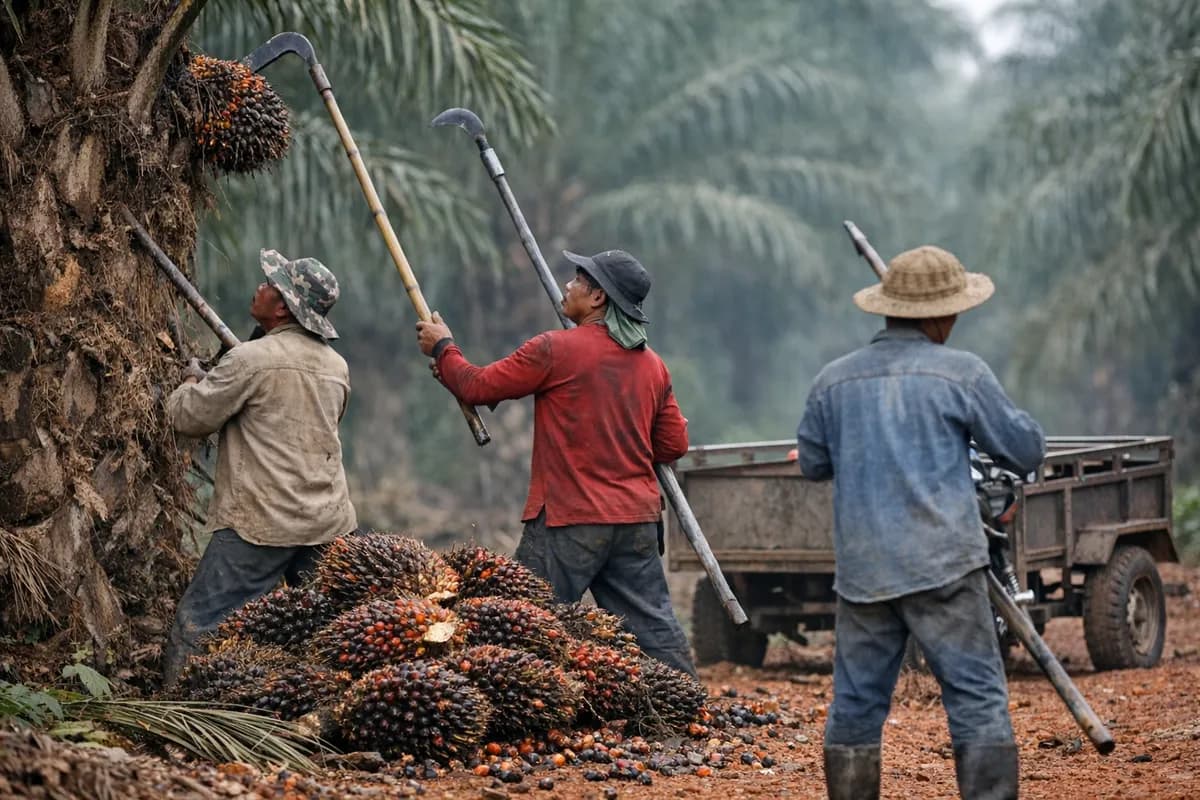
A palm oil certificate of analysis, or COA, is useful only when the buyer can connect each test result to the grade in the contract. For Indonesian palm oil, the lines that usually decide acceptance are free fatty acid, DOBI for crude palm oil, moisture and impurities, iodine value, cloud point for olein, and Lovibond color for refined grades.
We write this as the export desk at Indonesia Palm. The focus is practical: how a procurement team reads a COA before ordering, how the same values should appear in the purchase specification, and what to check before paying against shipping documents.
What should a palm oil COA show before a buyer accepts it?
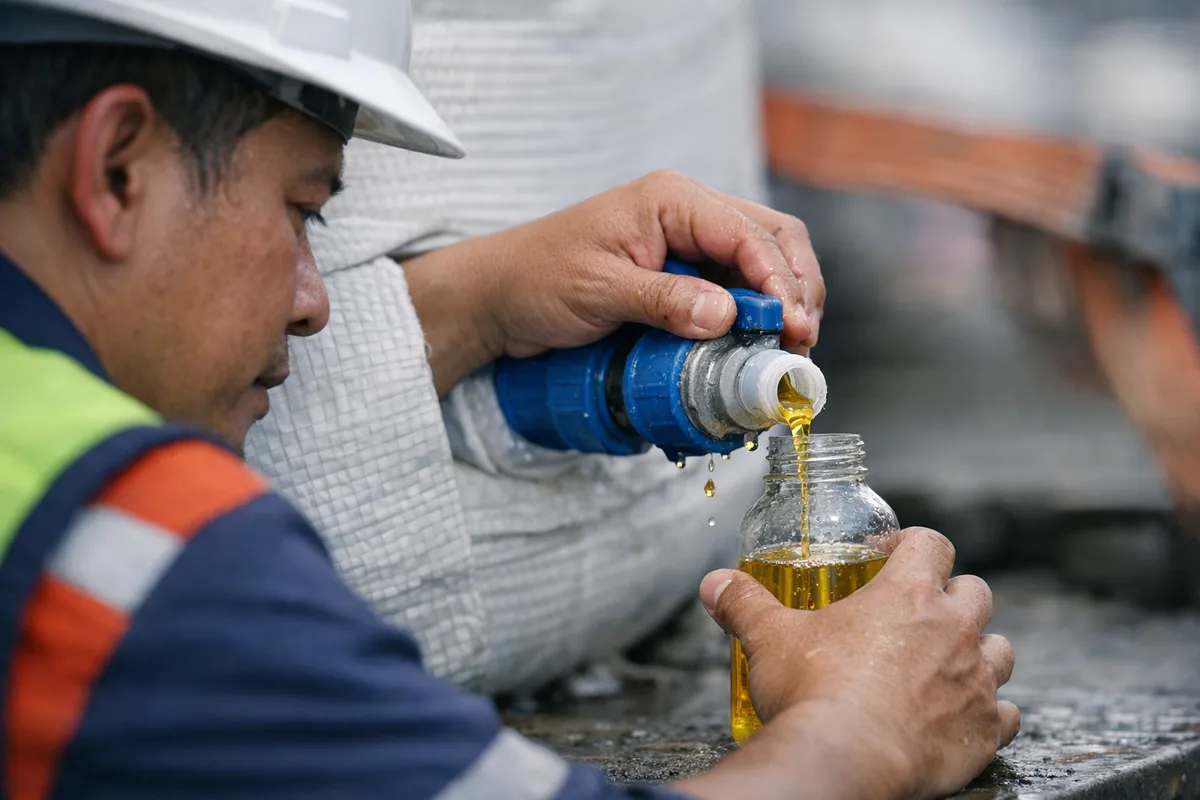
A usable palm oil COA should show the product grade, contract or shipment reference, sample point, test method, result, unit, and agreed limit for each parameter. If the COA only lists numbers without a grade or sample identity, it is weak evidence for shipment acceptance.
Start with the product name. “Palm oil” is not specific enough for a purchase file because Crude Palm Oil (CPO) and RBD Palm Olein IV56 RSPO Mass Balance are judged on different quality lines. CPO buyers usually read FFA, moisture and impurities, iodine value, and DOBI. RBD olein buyers usually read FFA, iodine value, cloud point, and Lovibond color.

Featured product
Crude Palm Oil (CPO)
Bulk vessel crude palm oil from Sumatra refineries with published FFA, DOBI, and moisture limits for refinery and oleochemical feed.
ISPO · Halal (BPJPH) · ISO 22000
View specificationsThen check the laboratory method. The International Organization for Standardization publishes ISO 660 for acid value and acidity in animal and vegetable fats and oils, ISO 662 for moisture and volatile matter, ISO 663 for insoluble impurities, ISO 17932 for DOBI and carotene content in palm oil using absorbance at 446 nm and 269 nm, and ISO 15305 for Lovibond color in animal and vegetable fats and oils. A buyer does not need to use only ISO methods, but the method should be named so the receiving lab can compare results on the same basis.
Finally, connect the COA to the contract. The limit on the COA should match the purchase order, not a generic refinery template. If your import or receiving file has strict wording, send the draft specification through our contact page before price is fixed.
How should FFA be read on an Indonesian palm oil COA?
FFA is the free fatty acid content of the oil, and the COA must state both the result and the basis, such as “as palmitic” for CPO. For our CPO, the FFA limit is ≤ 5.0% as palmitic; for our RBD palm olein routes, the FFA limit is ≤ 0.1%.
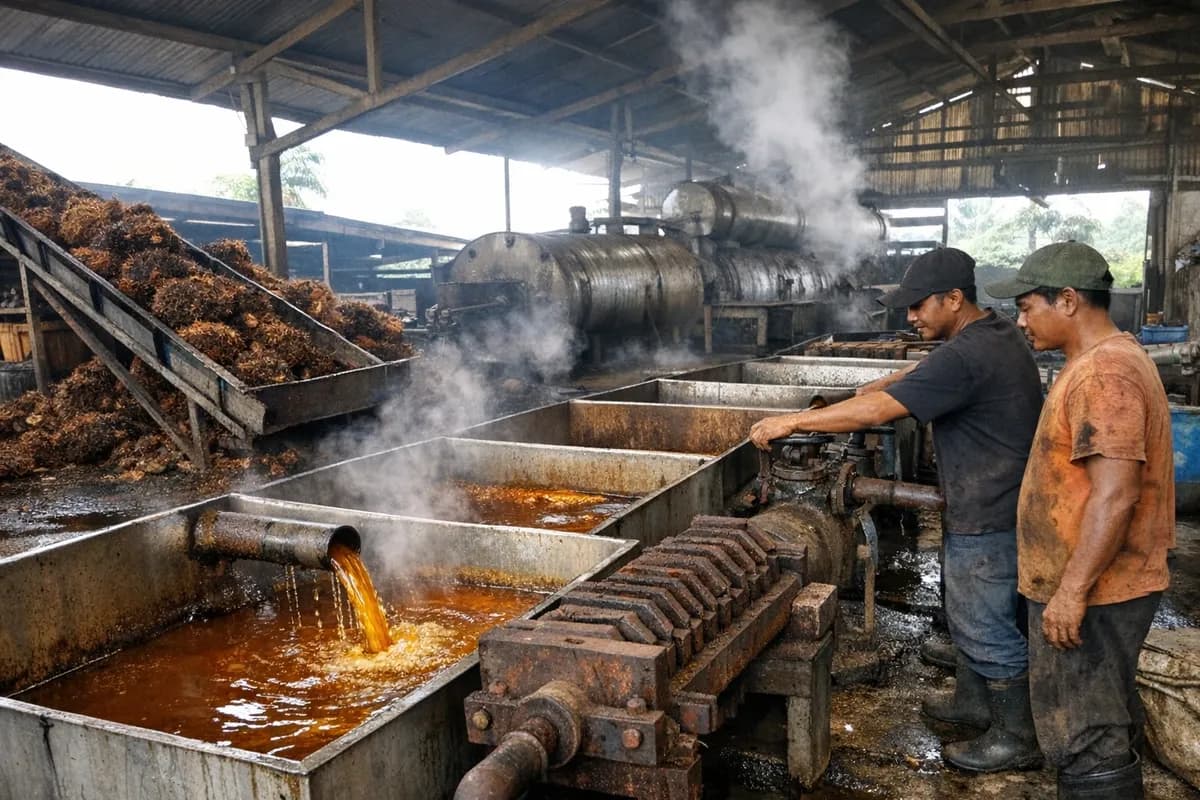
This difference is normal because CPO is an unrefined feedstock, while RBD palm olein has already been refined, bleached, and deodorised. In CPO, FFA affects refining loss and the economics of neutralisation. In RBD olein, a low FFA result supports food-grade handling and shelf-life expectations, although the buyer still needs to check peroxide value or other internal tests if those are part of its own intake rules.
Do not compare two FFA numbers unless the basis is the same. A result expressed as oleic acid is not identical to a result expressed as palmitic acid. For Indonesian CPO purchases, write the basis into the specification line so the seller, surveyor, and receiving lab do not convert it differently.
The sample point also matters. A shore tank sample, composite loading sample, vessel tank sample, and arrival sample can give different dispute positions. The contract should say which sample governs final quality if the buyer requires a binding load-port COA.
What does DOBI tell a CPO buyer?
DOBI, the deterioration of bleachability index, is mainly a CPO quality indicator that helps a refinery judge how well the oil may bleach during processing. For our Indonesian CPO, the DOBI target is ≥ 2.5.
DOBI is calculated from absorbance readings, and ISO 17932 specifies the use of 446 nm and 269 nm wavelengths for DOBI and carotene content in palm oil. A higher DOBI normally points to better bleachability and lower oxidation damage. A lower DOBI can mean the refinery needs more bleaching earth, may face darker refined oil, or may have to blend the cargo with better material to meet final color.
DOBI should not be treated as a replacement for FFA or moisture. A CPO cargo can have acceptable FFA but weak DOBI, or acceptable DOBI with moisture that creates storage risk. Read the four CPO lines together: FFA for hydrolysis, moisture and impurities for handling and contamination risk, iodine value for saturation profile, and DOBI for bleachability.
For RBD olein, DOBI is usually not the main acceptance line because the oil has already passed through bleaching and deodorisation. If an RBD olein COA uses a CPO-style template and omits cloud point or Lovibond color, ask for a corrected COA before releasing documents.
How do moisture, impurities, and color affect intake?
Moisture and impurities are intake risk lines for CPO, while Lovibond color is a normal appearance and refining performance line for RBD grades. Our CPO limit for moisture and impurities is ≤ 0.1%, and our RBD Palm Olein IV56 RSPO Mass Balance color limit is ≤ 3R Lovibond in a 5¼" cell.
Moisture can promote hydrolysis during storage, which may increase FFA. Impurities can settle in tanks, affect filtration, or create disputes over usable oil quantity. Some COAs show moisture and impurities as one combined value, while others show moisture separately from insoluble impurities. If your receiving rule separates them, write both lines into the purchase specification and request the same format on the COA.
Color is different. It is not a CPO acceptance line in the same way because crude oil naturally contains carotenoids and has a darker red-orange appearance. For RBD olein and RBD stearin, Lovibond color is a practical check on bleaching and deodorising performance. ISO 15305 covers Lovibond color measurement, and the cell length should be shown because a 5¼" cell result is not interchangeable with a different path length.
For buyers comparing refined products, do not use color alone. Our RBD olein IV56 is also defined by iodine value 54 to 56 and cloud point ≤ 10°C. Those two lines tell you more about fractionation and cold performance than the color line does. For more detail on the olein side of the specification, see our guide to Indonesian Palm Olein IV56 iodine value and cloud point.
What MOQ and price context should buyers connect to the COA?
The COA should be tied to an order size and route that we can actually supply. Our CPO MOQ is 3,000 MT by vessel, and our RBD Palm Olein IV56 RSPO Mass Balance MOQ is 500 MT by flexitank or 3,000 MT by vessel.
For CPO, we supply bulk vessel or shore tank cargo with a 2 to 3 week lead time from contract, HS code 1511.10, and FOB, CFR, or CIF Incoterms. For RBD Palm Olein IV56 RSPO Mass Balance, we supply 20 ft flexitank or bulk vessel cargo with a 2 to 3 week lead time from contract, HS code 1511.90, and FOB, CFR, or CIF Incoterms. The certification file differs by product, so the COA should sit beside the correct ISPO, RSPO, Halal BPJPH, or ISO 22000 document only when that claim applies to the order.
Price is driven by grade, shipment month, packing, Incoterm, volume, freight, certification claim, and Indonesia export costs at the time of contract. We do not quote spot prices in an article because the market changes daily. Physical palm oil offers commonly reference Bursa Malaysia Derivatives FCPO as a benchmark, then adjust for Indonesian origin differentials, refining margin where applicable, packing cost, freight, and the export duty or levy position in force.
The packing route changes the economics. Flexitank can fit smaller food-grade olein programs, while vessel lots suit large refinery or bulk users. If you are deciding between these routes, our flexitank vs bulk vessel MOQ and cost guide explains the practical trade-offs before quotation.
Send us the grade, target COA limits, quantity, destination port, Incoterm, and shipment month through our contact page for a current quotation.
How should the COA be written into the purchase order and contract?
Write the COA requirements into the purchase order as test lines with limits, units, method preference, and governing sample point. A shipment COA should then prove that the loaded cargo matches the same lines.
A practical CPO specification line might state FFA as palmitic, moisture and impurities, iodine value, and DOBI. A practical RBD olein line should state FFA, iodine value, cloud point, and Lovibond color in the correct cell length. If your factory also controls peroxide value, anisidine value, contaminants, or sensory checks, those are buyer-specific intake rules and should be agreed before contract.
The document set should be checked as one file. The commercial invoice, bill of lading, packing or tank record, COA, certificate of origin if required, and certification documents should use consistent product names and shipment references. A COA for “RBD palm olein” does not solve a customs or bank discrepancy if the invoice, contract, or import permit uses a different description.

Before shipment, ask for the draft document wording if your bank or broker is strict. After shipment, compare the final COA against the contract before originals are released or payment documents are accepted. Our Indonesian palm oil import documents guide sets out the wider file so the COA does not get reviewed in isolation.
A palm oil COA is strongest when it is boring: same grade as the contract, same limits as the purchase order, named methods, clear sample identity, and no unexplained extra lines. That is the standard we aim to make clear before the cargo is loaded.