Indonesian Palm Oil Flexitank vs Bulk Vessel: MOQ and Cost
Flexitank vs Bulk Vessel for Palm Oil is compared for Indonesian supply so buyers can choose a workable MOQ before quoting.
By Rina KartikaHead of Vegetable Oil TradingEight years structuring RSPO and ISCC palm oil programmes for refiners, food manufacturers, and biodiesel blenders across Asia and Europe.
Choosing between flexitank and bulk vessel is not only a logistics decision. For Indonesian palm oil, it decides the minimum order, the grade that can be offered, the document trail, the freight basis, and how much working capital is tied to one shipment.
We write this as the export desk at Indonesia Palm. The practical choice is often between containerised RBD palm olein in flexitanks and larger vessel parcels for CPO or RBD olein. A buyer asking for “best price palm oil” will get a more usable answer if the request already states the route: flexitank 20 ft or bulk vessel.
When does flexitank make sense for Indonesian palm oil?
Flexitank makes sense when the buyer needs a smaller containerised parcel, especially for RBD palm olein, and does not want to commit to a vessel lot. In our range, the clearest flexitank route is RBD Palm Olein IV56 RSPO Mass Balance from 500 MT.
For food manufacturers, distributors, and importers testing a new destination, flexitank supply can reduce the first commercial commitment. It also lets the buyer receive cargo through a container port instead of arranging bulk liquid discharge into shore tanks. That can matter when the destination does not have edible oil tank storage available, or when the buyer wants to move containers inland after customs clearance.
Our RBD Palm Olein IV56 RSPO Mass Balance is supplied with FFA ≤ 0.1%, iodine value 54 to 56, cloud point ≤ 10°C, colour ≤ 3R Lovibond 5¼", a 500 MT flexitank MOQ or 3,000 MT vessel MOQ, flexitank 20 ft or bulk vessel packing, 2 to 3 weeks lead time from contract, RSPO Mass Balance, ISO 22000, and Halal BPJPH certification, FOB, CFR, or CIF Incoterms, and HS code 1511.90.
Featured product
RBD Palm Olein IV56 (RSPO MB)
Food-grade RBD palm olein IV 54–56 with RSPO mass balance certification, flexitank or vessel packaging from 500 MT.
RSPO Mass Balance · ISO 22000 · Halal (BPJPH)
View specificationsFlexitank is also the route for our RSPO Segregated RBD palm olein, with a 500 MT MOQ and 3 to 4 weeks lead time from contract. Buyers using RSPO Segregated material usually care less about the lowest freight cost per metric ton and more about keeping the physical claim route clean from loading to customer intake.
The tradeoff is cost per metric ton. A flexitank shipment normally carries more container-related cost items than a vessel parcel: container freight, flexitank equipment, stuffing, terminal handling, destination container charges, and local drayage. We do not treat those as hidden costs. They should be built into the quote comparison before the buyer approves the route.
When does a bulk vessel make sense for Indonesian palm oil?
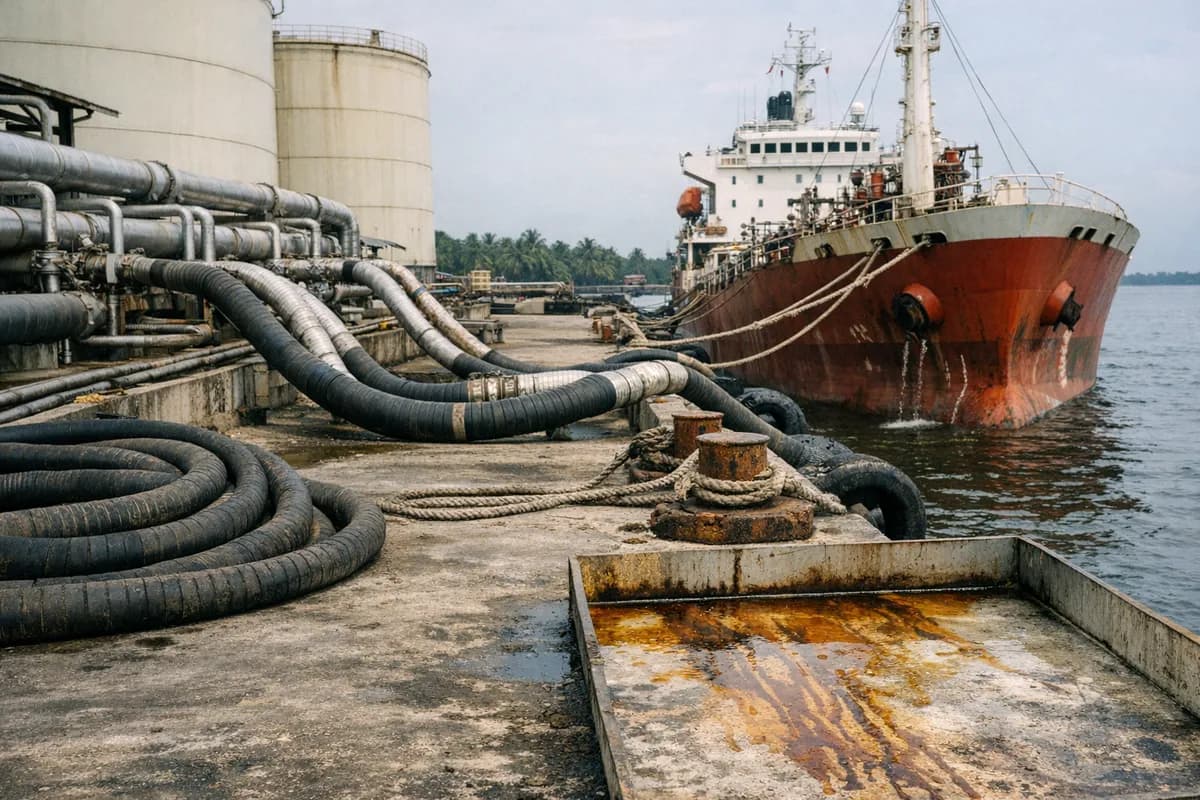
Bulk vessel makes sense when the buyer can handle larger lots and has access to edible oil or crude oil tank infrastructure at discharge. In our range, CPO is a vessel product, and RBD palm olein can also be supplied by vessel when the buyer reaches the vessel MOQ.
For refinery and oleochemical intake, Crude Palm Oil (CPO) is not a flexitank item in our published range. It is supplied from 3,000 MT by bulk vessel or shore tank. That route fits buyers with tank farms, refinery feedstock planning, or regular consumption that can absorb one cargo lot.

Bulk vessel can lower the logistics cost per metric ton when the full chain is ready for it. The buyer needs more than a discharge port. The plan should cover tank nomination, heating if required by the receiver’s operation, surveyor attendance, customs clearance timing, and demurrage exposure if the vessel waits.
Vessel supply can also fit biodiesel or renewable fuel buyers when the certification and volume match. Our RBD Palm Olein ISCC EU for biodiesel is supplied as a 1,000 MT vessel lot. That is a different commercial profile from a 500 MT flexitank food-grade olein order, so the buyer should not compare only the product name.
If your plant is already set up for tanks and you want to compare available vessel grades, review our bulk vessel palm oil lots before asking for a freight-inclusive quote.
What is the MOQ and price context for flexitank vs bulk vessel?
For our Indonesian palm oil range, the key MOQ comparison is 500 MT by flexitank or 3,000 MT by vessel for RBD Palm Olein IV56 RSPO Mass Balance. CPO starts at 3,000 MT by vessel, while RSPO Segregated RBD palm olein starts at 500 MT by flexitank.
Price depends on grade, certification claim, packing route, Incoterm, volume, shipment timing, freight, and Indonesia export costs in force at contract time. We do not publish spot prices in a sourcing guide because palm oil markets move daily and any number would become stale.
For price structure, buyers commonly see physical palm oil offers built from a traded palm oil benchmark such as Bursa Malaysia Derivatives FCPO, then adjusted for Indonesian origin, refined product margin, certification premium, packing, freight, and the seller’s shipment position. Indonesian export costs are also affected by export duty and levy settings issued by the Indonesian authorities, so the final quote should be dated and tied to a shipment month.
Flexitank can win when the buyer values lower entry volume, container-port access, and easier stock splitting. Bulk vessel can win when the buyer has the tank capacity and wants lower logistics cost per metric ton over a larger parcel. The right comparison is landed cost into the buyer’s receiving point, not only FOB price at origin.
For a current quote, send us the grade, required certification, quantity, packing preference, Incoterm, destination port, and shipment month through our contact page. If you are still deciding between 500 MT flexitank and 3,000 MT vessel, say that in the inquiry so we can quote the routes separately.
Which palm oil grades can ship by each route?
Not every Indonesian palm oil grade should be treated as available in both routes. In our published range, RBD Palm Olein IV56 RSPO Mass Balance is the main dual-route grade, while CPO is a vessel route and RSPO Segregated olein is a flexitank route.
This matters because the packing decision can force the product decision. A buyer asking for CPO in flexitank would be outside our stated CPO packing route. A buyer asking for RSPO Segregated olein by vessel would also be outside our published RSPO Segregated packing route.
RBD palm stearin has its own handling logic. Our stearin is supplied from 300 MT in 25 kg PP bags or by bulk vessel. A buyer using stearin for soap, fatty acid, or hard fraction blending should first confirm whether the receiving site wants bags for warehouse handling or bulk intake for continuous processing.
Refined palm kernel oil is different again. Our RPKO is supplied from 200 MT by flexitank, with IBC also listed as a packing option. Buyers should not apply RBD olein freight assumptions to RPKO because the HS code, oil chemistry, and typical application differ.
For buyers comparing palm olein with other refined products, our RBD palm olein category page is a useful starting point before fixing the shipment route.
How should a buyer specify a flexitank or vessel order?
Specify the order in the same sequence your contract will need: grade, certification claim, quantity, packing, Incoterm, destination port, shipment month, and document set. This prevents the common problem where price is agreed for one route but the buyer’s bank, customs broker, or factory expects another.
A workable flexitank inquiry might say: 500 MT RBD Palm Olein IV56 RSPO Mass Balance, flexitank 20 ft, CIF named destination port, Halal BPJPH required, shipment in the named month, certificate of analysis required. That gives us enough detail to check grade, route, and document alignment.
A workable vessel inquiry might say: 3,000 MT CPO, bulk vessel, FOB Indonesian port or CIF named destination port, certificate of analysis required, HS code to be checked by buyer’s broker. The buyer should also state any discharge restrictions before contract because vessel waiting time can become a cost issue.
For Incoterms, we offer FOB, CFR, and CIF where listed for the grade. Under the ICC Incoterms rules, those terms allocate responsibility for main freight and insurance differently, so the buyer should decide whether their own freight desk or our export desk should arrange ocean freight.
Before shipment, the commercial invoice, bill of lading, certificate of analysis, packing or tank record, and certification documents should match the contract wording. If your team needs a fuller document sequence, our guide on how to import Indonesian palm oil covers the usual import file.
What cost tradeoffs should be checked before contract?
Check total landed cost, inventory exposure, receiving capability, and document risk before contract. Flexitank and bulk vessel offers can look close at origin but produce different costs after freight, port handling, storage, and inland movement are added.
For flexitank, ask your forwarder or customs broker to confirm destination container handling, free time, container return process, local delivery, and any restrictions on flexitank discharge at the receiver’s site. The buying advantage is a lower MOQ, but the route depends on container discipline.
For vessel, ask the receiving terminal to confirm tank availability, discharge window, survey requirements, heating or pumping constraints if applicable, and demurrage terms. The buying advantage is scale, but one missed tank nomination can erase part of the freight benefit.
Also check cash flow. A 3,000 MT vessel parcel ties up more working capital than a 500 MT flexitank programme. If the buyer’s demand is uncertain, a smaller flexitank order can protect cash and warehouse planning. If the buyer has steady throughput and tank access, vessel supply may be the more efficient route.
The best route is the one that matches the grade, MOQ, port infrastructure, and customer claim requirement. Once those points are fixed, we can price the Indonesian palm oil shipment on the right basis instead of forcing a generic comparison.