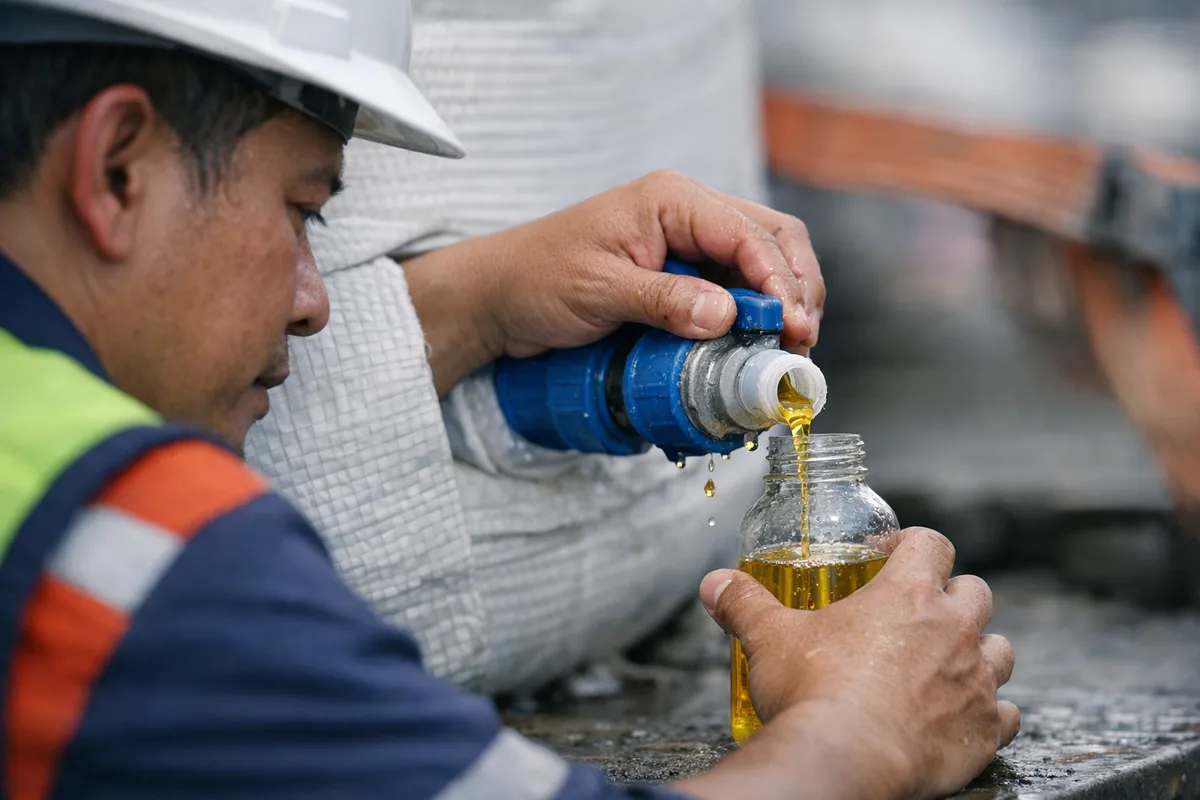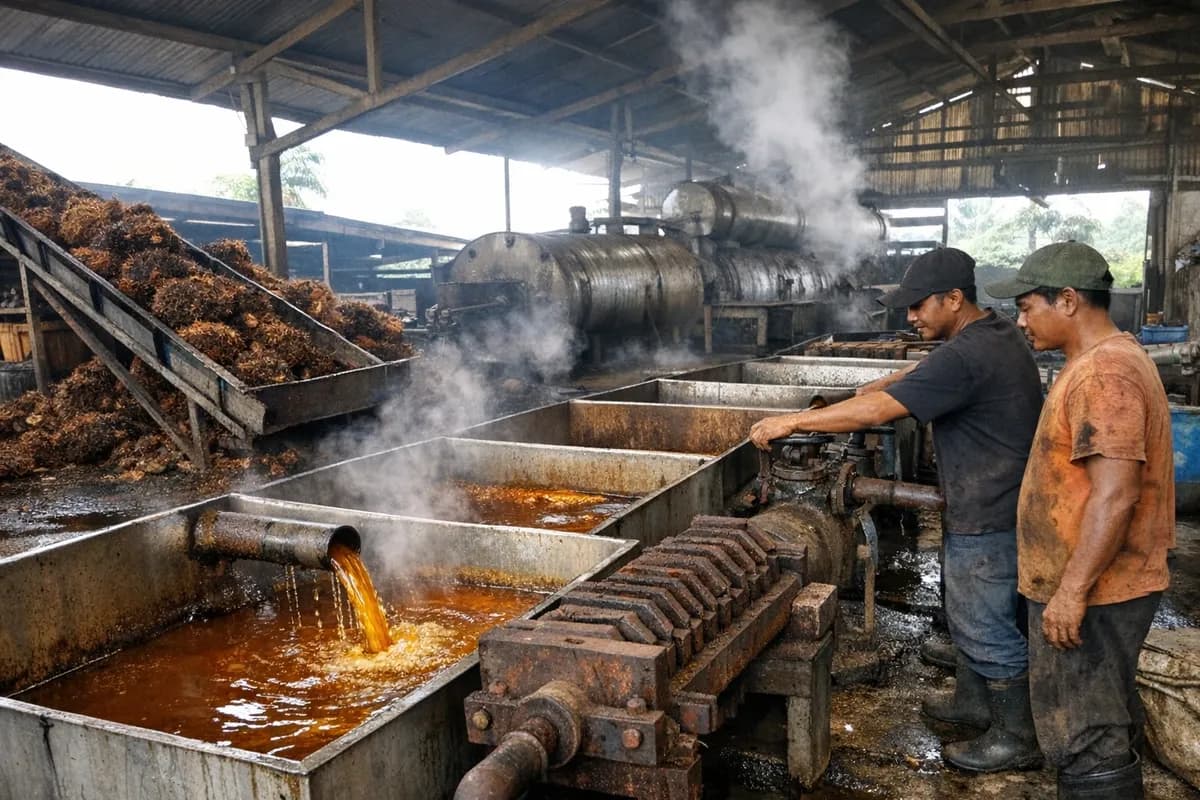
Indonesian Palm Olein IV56: Iodine Value and Cloud Point
Indonesian Palm Olein IV 56 buyers can use this guide to specify iodine value, cloud point, MOQ, packing, and quote details.
By Rina KartikaHead of Vegetable Oil TradingEight years structuring RSPO and ISCC palm oil programmes for refiners, food manufacturers, and biodiesel blenders across Asia and Europe.
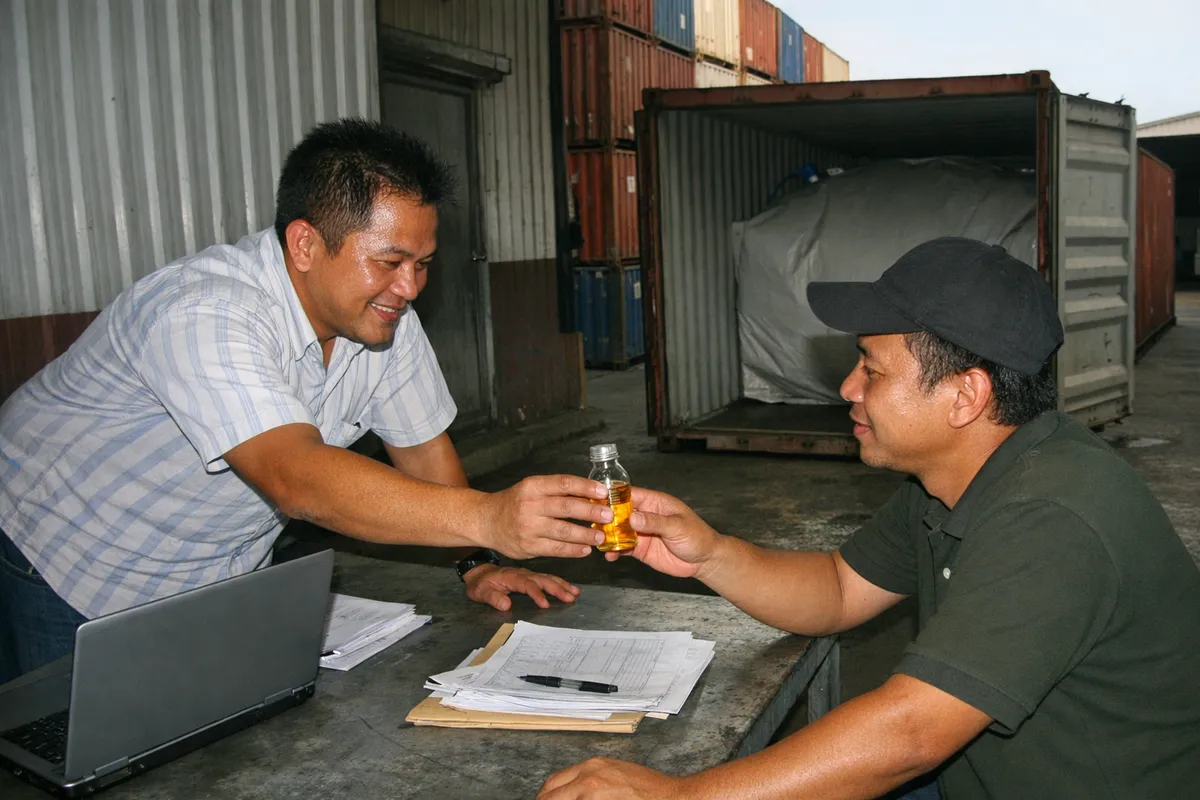
Palm olein IV56 is a refined liquid fraction of palm oil used where buyers need a defined iodine value and a controlled cloud point. For importers and manufacturers, the two numbers are not lab notes. They affect intake approval, cold storage behaviour, customer specifications, and how the cargo should be described in the purchase contract.
We write this guide as the export desk at Indonesia Palm. It explains how we specify Indonesian RBD Palm Olein IV56, what iodine value and cloud point mean in buying terms, and what details we need before quoting a shipment.
What does IV56 mean in Indonesian RBD palm olein?
IV56 means the palm olein is sold around the IV56 grade, with our published iodine value range set at 54–56. For our RBD Palm Olein IV56 RSPO Mass Balance, the full export specification is FFA ≤ 0.1%, iodine value 54–56, cloud point ≤ 10°C, colour ≤ 3R Lovibond 5¼", 500 MT MOQ by 20 ft flexitank or 3,000 MT by bulk vessel, 2–3 weeks lead time from contract, RSPO Mass Balance, ISO 22000, and Halal BPJPH certification, FOB, CFR, or CIF Incoterms, and HS code 1511.90.
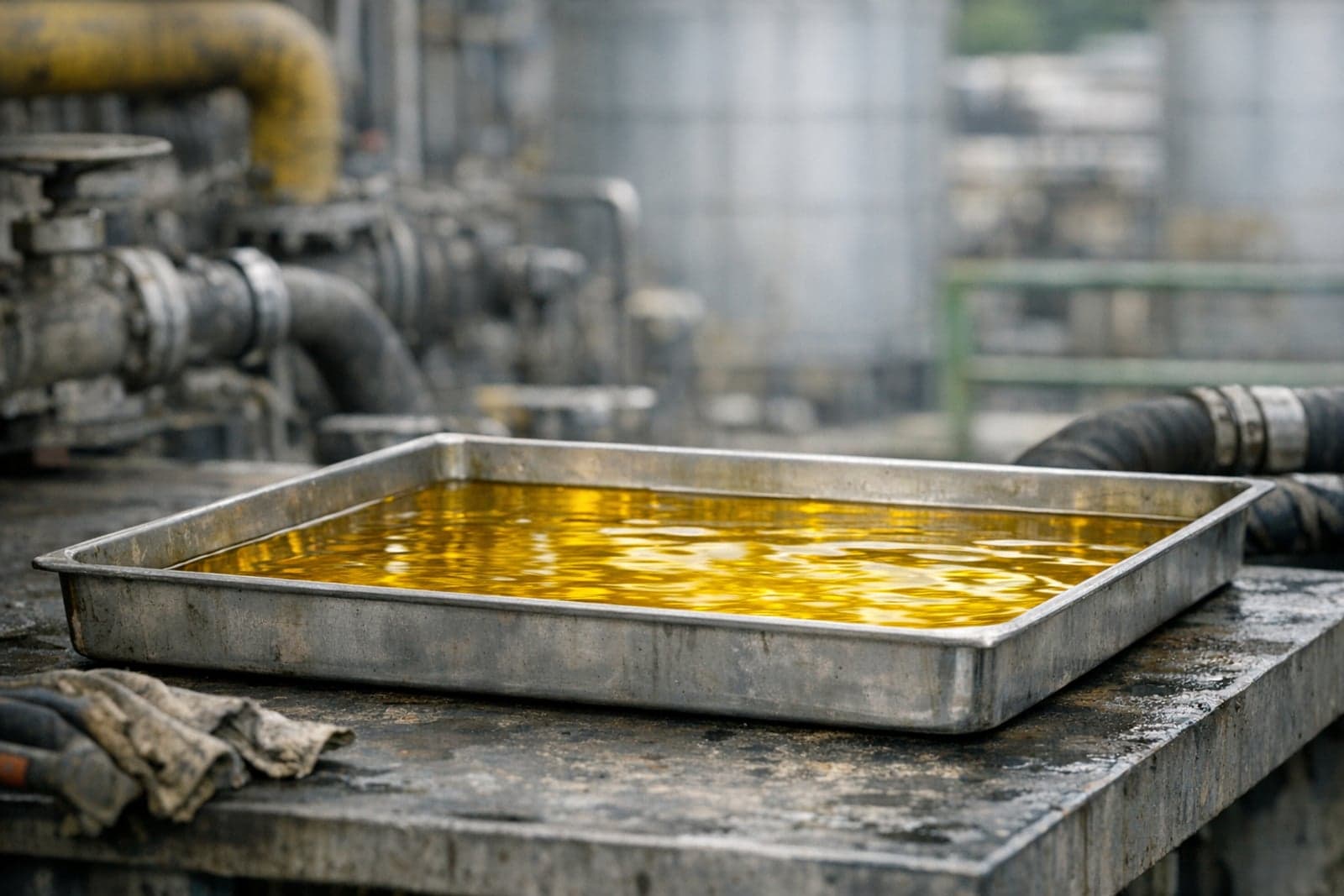
Featured product
RBD Palm Olein IV56 (RSPO MB)
Food-grade RBD palm olein IV 54–56 with RSPO mass balance certification, flexitank or vessel packaging from 500 MT.
RSPO Mass Balance · ISO 22000 · Halal (BPJPH)
View specificationsThe “RBD” part matters. It means refined, bleached, and deodorised, so the oil is not crude palm oil. Buyers normally use this grade for food manufacturing, frying oil blending, and other applications where a refined liquid palm fraction is required. If you are comparing it with crude material for refinery intake, our article on Indonesian RBD palm olein vs crude palm oil explains the difference in grade selection before quoting.
The “IV56” label should not be written as a single-point guarantee unless both parties agree that in the contract. We quote and ship against the specification range. A certificate of analysis should report the tested iodine value, and the purchase specification should state the accepted range, not only the product nickname.
For procurement teams, this prevents a common dispute. A shipment testing at IV 55 is still within an IV 54–56 specification. If a buyer’s factory system only accepts a narrower internal range, we need that target before contract review.
How does iodine value affect palm olein performance?
Iodine value measures the degree of unsaturation in the oil, so it helps buyers distinguish a more liquid olein fraction from harder palm fractions. In this grade, the buying control is the IV 54–56 range, which should be written into the purchase specification and checked against the certificate of analysis.
In practical terms, IV is one of the first numbers a technical buyer checks when matching palm olein to an existing recipe or process. A lower IV palm fraction usually behaves harder, while a higher IV olein grade usually behaves more liquid. That is why the number matters to shortening plants, frying oil blenders, and manufacturers that need repeatable handling across deliveries.
IV should not be used alone. A purchase file that only says “RBD palm olein IV56” is incomplete because the cargo may still be rejected if FFA, cloud point, colour, certification claim, packing, or documents do not match the buyer’s intake requirements. We treat IV as one part of the grade definition, not the whole specification.
There is also a sourcing difference between palm oil fractions. Our RBD Palm Stearin, for example, is the harder fraction and is specified with IV ≤ 48. It is bought for different applications than IV56 olein. That comparison is useful when a buyer’s formulation team asks whether it needs a liquid olein fraction or a harder palm fraction.
If your plant has a receiving specification, send the exact IV tolerance and test method wording through our contact page before we price the cargo. We can then check the request against the grade route rather than treating it as a generic palm oil inquiry.
What does cloud point ≤ 10°C mean for buyers?
Cloud point ≤ 10°C means the oil is specified so visible clouding should begin at 10°C or below under the agreed laboratory test conditions. For buyers, this number is mainly a cold-behaviour control for storage, transport, and finished product appearance.
Palm olein can develop cloudiness when it is cooled. That cloudiness is not the same as spoilage, but it can cause receiving questions if the destination warehouse, transit lane, or customer shelf condition is colder than expected. A buyer in a warm market may rarely see this issue. A buyer discharging containers in winter or storing oil in an unheated warehouse should review handling temperatures before placing the order.
The cloud point also interacts with logistics. Flexitanks and bulk vessels expose the cargo to different transit and discharge conditions. A flexitank route may sit at the port, rail terminal, or consignee yard before unloading. A bulk vessel route is managed through shore tanks and vessel systems. In either route, the buyer should plan heating or tempering if the local conditions are likely to cool the oil below the cloud point.
Do not use cloud point as a substitute for the whole quality check. It does not replace FFA, IV, colour, or the document trail. It answers a specific question: how the liquid fraction behaves as temperature falls.
When comparing RSPO claim models, cloud point is separate from sustainability chain of custody. Our RBD Palm Olein RSPO Segregated uses the same IV 54–56 and cloud point ≤ 10°C limits as our Mass Balance grade, but the sourcing claim is different. If your customer requires a physical segregation claim, review our note on RSPO Segregated vs Mass Balance palm oil before fixing the contract wording.
What is the minimum order and price context for Palm Olein IV56?
Our minimum order for RBD Palm Olein IV56 RSPO Mass Balance is 500 MT by 20 ft flexitank or 3,000 MT by bulk vessel. Price depends on grade, RSPO claim model, packing route, Incoterm, volume, shipment month, freight, and Indonesian export cost at the time of contract.
We do not publish spot prices in an article because palm oil prices move daily. A physical palm olein offer is normally built from a palm oil market reference such as Bursa Malaysia Derivatives FCPO, then adjusted for Indonesian origin, refining margin, olein fraction, RSPO claim, packing, freight, and the shipment window. Indonesian export costs may also affect the final offer because Indonesia’s Ministry of Trade publishes palm oil reference prices for export duty administration, and Indonesia’s Ministry of Finance publishes the export duty and levy rules.
Packing changes the cost structure. A 500 MT flexitank order is suitable for buyers who want containerised receiving and a lower starting volume. A 3,000 MT vessel order fits buyers with bulk shore tank intake and the ability to receive a vessel parcel. The oil is the same grade route, but the freight, handling, loading plan, and document set are not identical.
Incoterm also changes the quote. Under FOB, the buyer controls the main ocean freight. Under CFR, we arrange freight to the named destination port. Under CIF, we arrange freight and marine insurance to the named destination port. Destination customs clearance, duties, taxes, discharge-side charges, and inland transport remain buyer-side matters unless the contract states otherwise.
For a current quotation, send volume, packing, Incoterm, destination port, shipment month, RSPO requirement, and document list via our contact page. If the buying team is still deciding between flexitank and vessel supply, ask first for a route check rather than a final price.
How should Palm Olein IV56 be written in a purchase specification?
Write the purchase specification as a controlled product description, not as “palm oil IV56” alone. The line should identify RBD palm olein, the IV range, cloud point limit, FFA limit, colour limit, certification claim, packing, Incoterm, destination port, and document requirements.
A workable inquiry line looks like this: “RBD Palm Olein IV56, RSPO Mass Balance, IV 54–56, cloud point ≤ 10°C, flexitank, CIF destination port, shipment month, Halal BPJPH and certificate of analysis required.” The buyer should add any bank, customs broker, or end-customer wording before contract, not after loading.
The certificate of analysis should match the quality items in the sales specification. For this grade, the buyer should expect IV, cloud point, FFA, and colour to be checked. If your receiving laboratory uses a specific method or rejects cargo under a stricter internal standard, that wording belongs in the negotiation stage.
The commercial documents should also use consistent naming. The product description on the proforma invoice, commercial invoice, bill of lading, certificate of analysis, and any RSPO or Halal support should not shift between vague terms such as “vegetable oil” and the contracted product name unless your broker and bank have approved that wording. For a wider import file checklist, see our guide on how to import Indonesian palm oil.
HS code handling should be checked by the importer of record. We publish HS code 1511.90 for this product, but the destination customs declaration is the buyer’s responsibility. Your customs broker should confirm the local tariff line, import permit position, food registration if applicable, and any pre-arrival filing requirement.
The safest sourcing sequence is simple. Confirm the application and customer claim first. Fix IV and cloud point limits in the specification. Choose flexitank or vessel packing. Then request a quote with the Incoterm and destination port. That order gives both sides a clear basis for price, documents, and shipment planning.