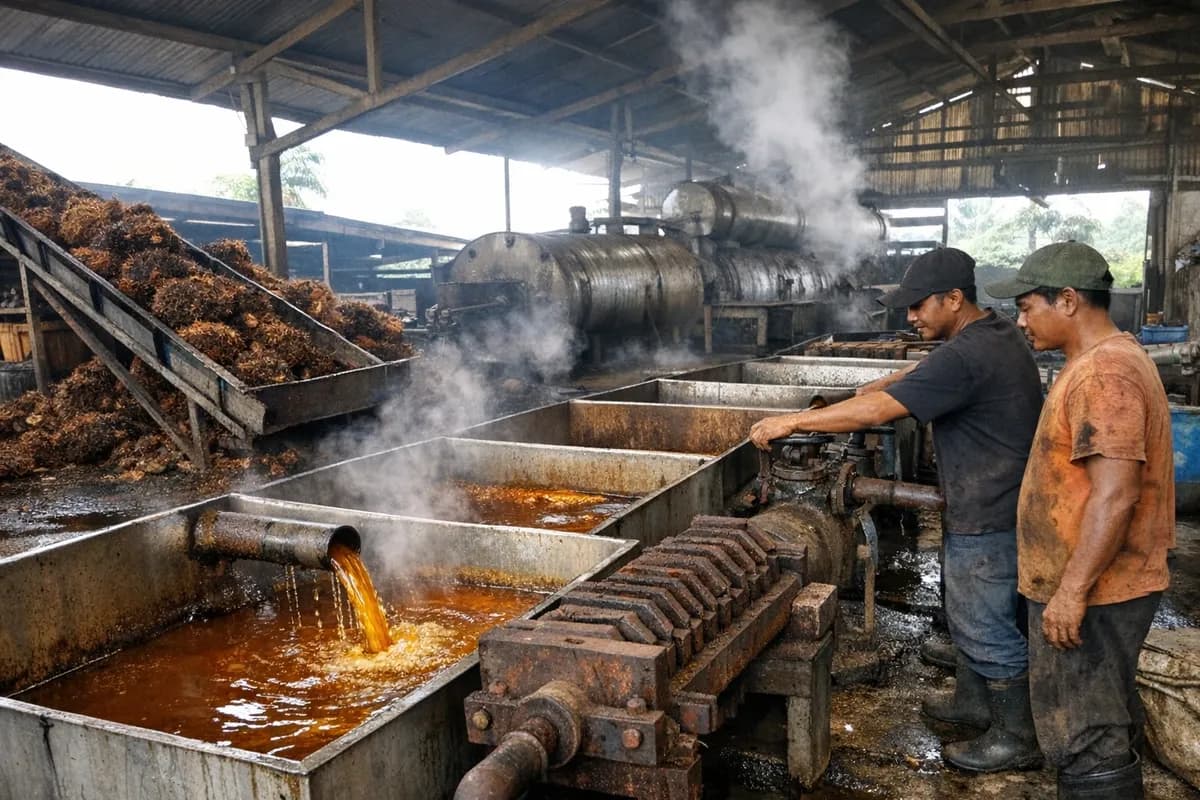
Indonesian Palm Kernel Oil vs Palm Oil for Buyers
Palm Kernel Oil vs Palm Oil from Indonesia can change your HS code and MOQ, so this guide helps buyers specify the right cargo.
By Rina KartikaHead of Vegetable Oil TradingEight years structuring RSPO and ISCC palm oil programmes for refiners, food manufacturers, and biodiesel blenders across Asia and Europe.
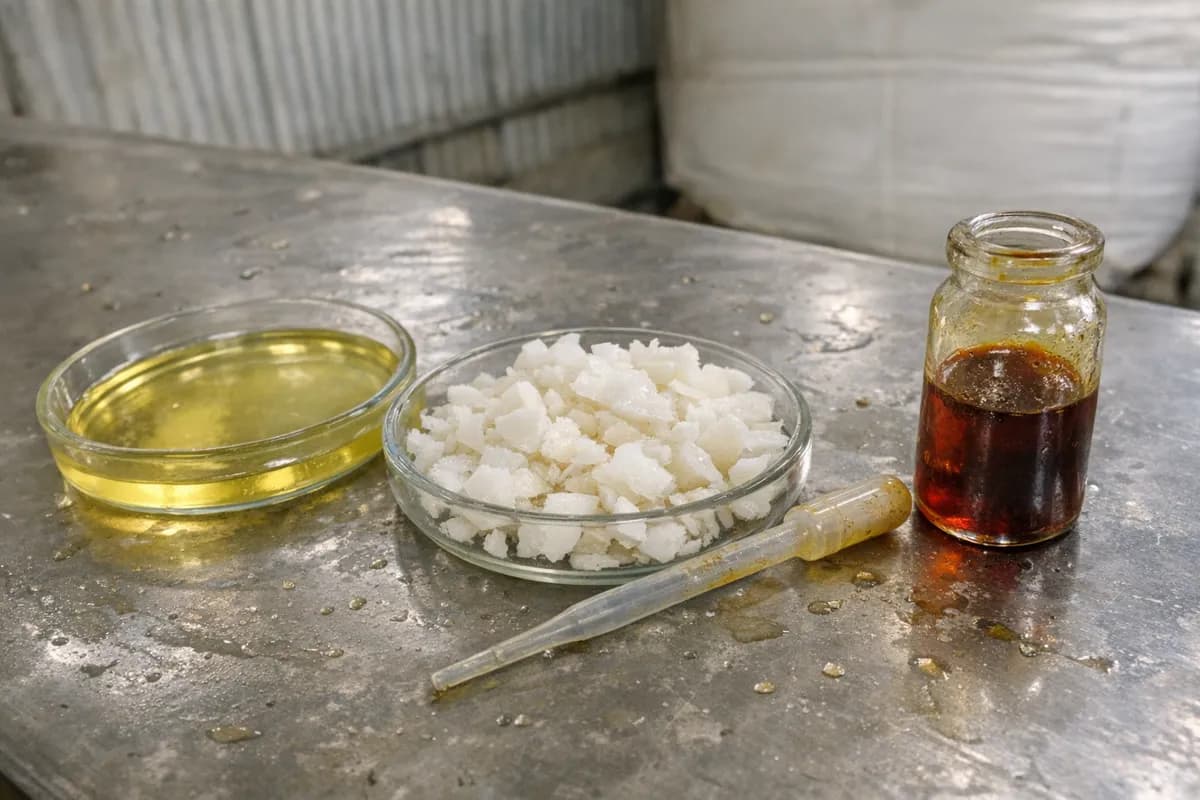
Palm kernel oil and palm oil are not interchangeable buying terms. They come from different parts of the oil palm fruit, trade under different HS codes, and are specified for different performance needs in food, oleochemical, and fuel supply chains.
We write this as the export desk at Indonesia Palm. The guide is for importers and procurement teams comparing Indonesian Refined Palm Kernel Oil with palm oil grades such as CPO, RBD palm olein, and palm stearin before requesting a quote.
What is the difference between palm kernel oil and palm oil?
Palm kernel oil is made from the kernel inside the oil palm fruit, while palm oil is made from the fruit flesh. In buying terms, the main difference is the fatty profile: refined palm kernel oil is a lauric oil, while palm oil grades such as CPO and RBD olein are not bought on lauric content.
For buyers, this difference shows up in the specification sheet. Our Refined Palm Kernel Oil carries lauric content ≥ 48% and iodine value 16 to 19. That is a very different purchase target from RBD palm olein, where iodine value and cloud point are normally central to the buying decision.
Featured product
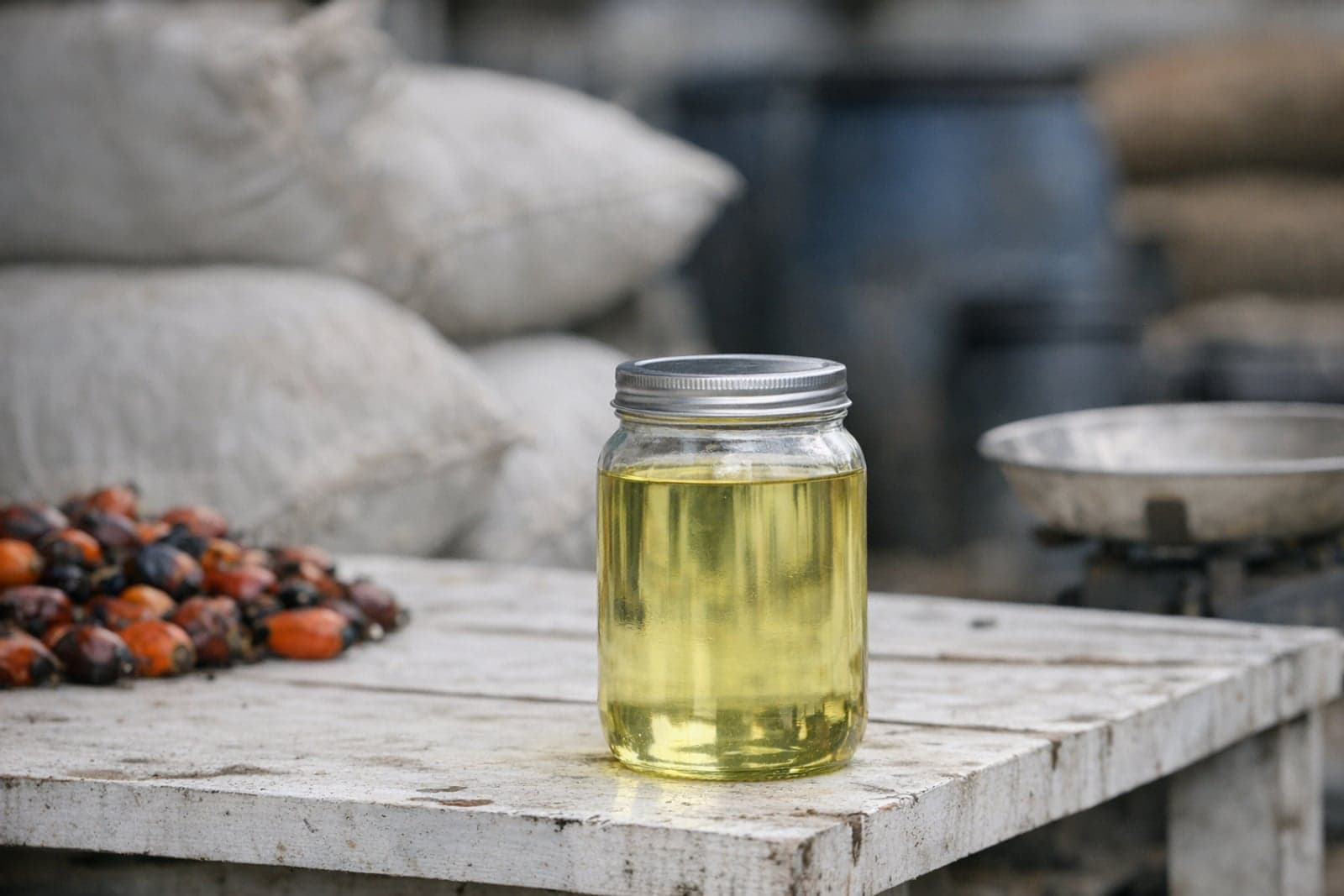
Refined Palm Kernel Oil (RPKO)
ISCC EU refined palm kernel oil with lauric content ≥ 48% for food and oleochemical programmes, flexitank from 200 MT.
ISCC EU · ISO 22000 · Halal (BPJPH)
View specificationsThe HS code also changes. Our Refined Palm Kernel Oil is supplied under HS code 1513.21. Our RBD palm olein grades are supplied under HS code 1511.90, while our Crude Palm Oil (CPO) is supplied under HS code 1511.10. Buyers should confirm the final import classification with their customs broker, but the product family should be fixed before the quotation stage.
The practical point is simple: do not request “palm oil” if the formulation or plant intake specification needs palm kernel oil. Use the exact grade name, target application, destination port, and certification requirement from the first inquiry.
Which specifications should buyers compare before ordering?
Compare lauric content, iodine value, FFA, colour, packing route, MOQ, certification, Incoterm, and HS code. Those fields decide whether the product can be received by your plant and cleared by your broker without rework.
For palm kernel oil, our Refined Palm Kernel Oil is supplied with FFA ≤ 0.1%, iodine value 16 to 19, lauric content ≥ 48%, colour ≤ 1.5R Lovibond 5¼", a 200 MT flexitank MOQ, flexitank 20 ft or IBC packing, 2 to 3 weeks lead time from contract, ISCC EU, ISO 22000, and Halal BPJPH certification, FOB, CFR, or CIF Incoterms, and HS code 1513.21.
For a liquid refined palm oil grade, our RBD Palm Olein IV56 RSPO Mass Balance is supplied with FFA ≤ 0.1%, iodine value 54 to 56, cloud point ≤ 10°C, colour ≤ 3R Lovibond 5¼", a 500 MT flexitank MOQ or 3,000 MT vessel MOQ, flexitank 20 ft or bulk vessel packing, 2 to 3 weeks lead time from contract, RSPO Mass Balance, ISO 22000, and Halal BPJPH certification, FOB, CFR, or CIF Incoterms, and HS code 1511.90.
If the buyer needs a harder palm fraction, RBD Palm Stearin is a separate grade with iodine value ≤ 48 and melting point 42 to 48°C. That is not a substitute for palm kernel oil when the buying specification is built around lauric content.
Send your target specification and destination port through our contact page if you want us to check whether RPKO, palm olein, CPO, or stearin is the correct quoting route.
What MOQ and price context should buyers expect?
Our Refined Palm Kernel Oil MOQ is 200 MT by flexitank. For palm oil grades, our RBD palm olein starts from 500 MT by flexitank, CPO is supplied in 3,000 MT vessel lots, RBD palm stearin starts from 300 MT, and ISCC EU RBD palm olein for biodiesel is supplied in 1,000 MT vessel lots.
Price is driven by the grade, certification claim, packing format, Incoterm, volume, shipment month, origin availability, freight, and Indonesian export cost at the time of contract. We do not publish spot prices in articles because palm oil and lauric oil markets move too quickly for a web page to stay accurate.
For palm oil grades, physical offers may reference Bursa Malaysia Derivatives FCPO as one visible benchmark, then adjust for Indonesian origin, refining margin, certification scope, packing, freight, and contract timing. For palm kernel oil, buyers should expect the price discussion to reflect lauric oil supply and demand, including palm kernel oil and competing lauric oils, rather than only the CPO benchmark.
The Incoterm changes the buyer’s landed cost. FOB puts the main ocean freight under the buyer’s control. CFR includes freight to the named destination port. CIF includes freight and marine insurance arranged by the seller to the named destination port. Import duty, taxes, destination clearance, and local delivery remain matters for the buyer unless a contract says otherwise.
For a current quotation, send the grade, quantity, Incoterm, destination port, shipment month, and required certificates through our contact page.
Which applications fit palm kernel oil better than palm oil?
Palm kernel oil fits buying programmes that specify lauric content. Palm oil grades fit programmes built around CPO refining, liquid olein use, hard palm fractions, RSPO food claims, or ISCC EU fuel supply.
A buyer using RPKO should make lauric content a purchase line item. Our RPKO is specified at lauric content ≥ 48%, so it is the relevant product when the internal specification is written around a lauric oil requirement. The same inquiry should also state whether Halal BPJPH, ISO 22000, or ISCC EU documentation is needed.
A buyer using RBD palm olein should focus on iodine value and cloud point. Our IV56 olein is specified at iodine value 54 to 56 and cloud point ≤ 10°C, which are the fields buyers normally use to separate one refined olein offer from another. If the end customer requires RSPO Segregated rather than Mass Balance, that claim model must be stated before contract because the packing and document route are different.
A buyer using CPO should normally be a refinery or industrial processor able to receive bulk vessel cargo. A buyer using palm stearin should check melting point and packing because bagged and bulk routes affect handling at discharge.
What documents and certifications should be checked?
Check the HS code, certificate of analysis, certification claim, Incoterm, bill of lading, invoice, and packing or tank record against the same product name. A document file for RPKO should not be mixed with a palm olein or CPO description.
For RPKO, the certificate of analysis should show the fields agreed in the contract, especially FFA, iodine value, lauric content, and colour. The commercial invoice and bill of lading should align with HS code 1513.21 when that is the product route used in our offer.
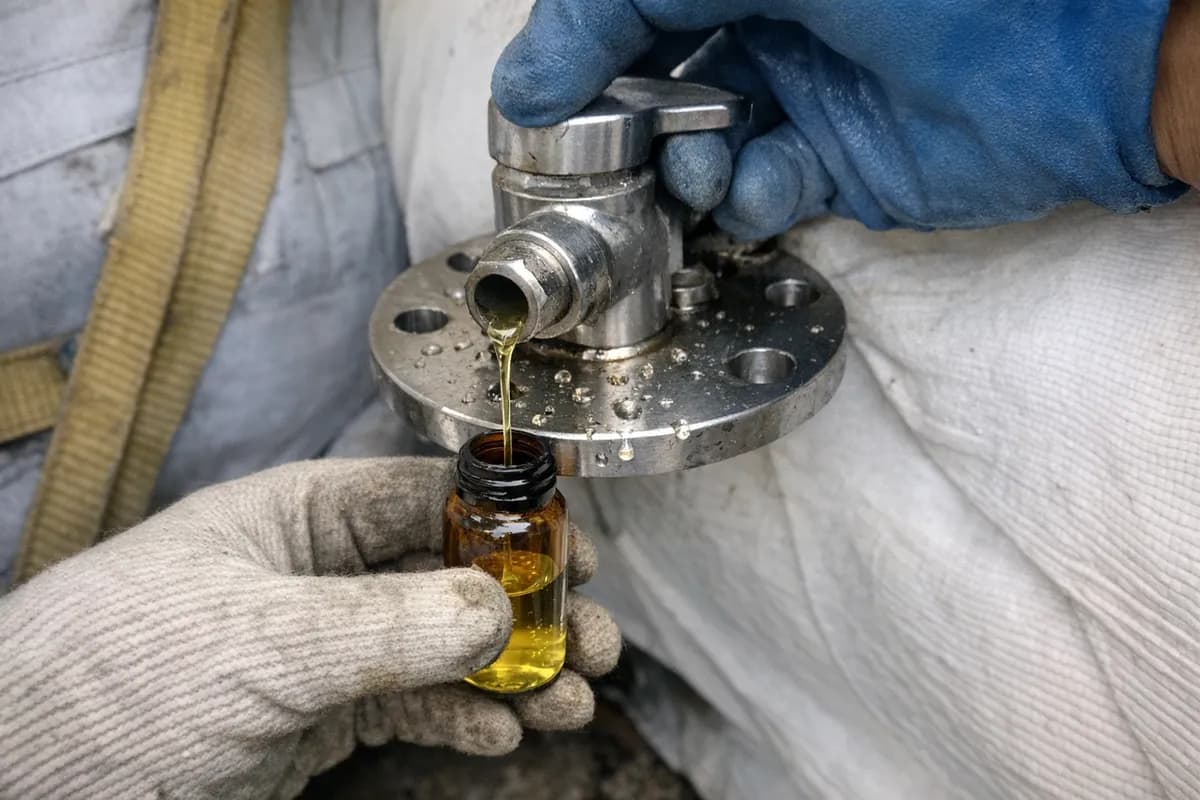
For RBD palm olein, the certificate file should focus on FFA, iodine value, cloud point, and colour. HS code 1511.90 should match the product route used in our published specification. If the buyer requires RSPO Mass Balance or RSPO Segregated, the claim model should appear consistently across the contract and shipment documents.
For CPO, the buyer should check FFA, moisture and impurities, iodine value, and DOBI against the agreed specification. Our CPO route uses HS code 1511.10, bulk vessel or shore tank packing, and a 3,000 MT vessel lot MOQ.
EU buyers should also review deforestation due diligence requirements before price negotiation. Our article on EUDR compliance for Indonesian palm oil imports gives a separate checklist for that process.
How should a buyer order Indonesian palm kernel oil or palm oil?
Start with the product name, then confirm the specification, MOQ, packing, certification claim, Incoterm, destination port, and document list. A quote request that says “palm oil CIF” is not enough because RPKO, CPO, olein, and stearin move through different HS codes and shipment routes.
A workable inquiry for RPKO would state: “200 MT Refined Palm Kernel Oil, flexitank, CIF destination port, Halal BPJPH required, shipment month stated.” A workable inquiry for palm olein would state the IV grade, RSPO claim if any, flexitank or vessel packing, and destination port.
After the commercial terms are agreed, the contract should repeat the grade, quantity, shipment window, Incoterm, payment terms, certificate set, and document wording required by the buyer’s bank or broker. Before loading, the buyer should approve the draft document instructions so the invoice, bill of lading, certificate of analysis, and certification documents do not conflict.
The best buying decision is not palm kernel oil versus palm oil in general. It is matching one Indonesian grade to one specification, one application, and one import file before the price is fixed.